

ETFs are often described as an easy way to start investing, and that is partly true. An exchange-traded fund pools investors’ money into a portfolio of stocks, bonds, or other assets, then sells shares that trade on an exchange during the market day. For a beginner, that can mean broad exposure in one purchase instead of building a portfolio security by security. But an ETF is only a structure, not a quality label. Some ETFs are plain, diversified, and low-cost. Others are narrow, complex, or built for tactical use. (finra.org)
An ETF Is a Fund You Trade Like a Stock
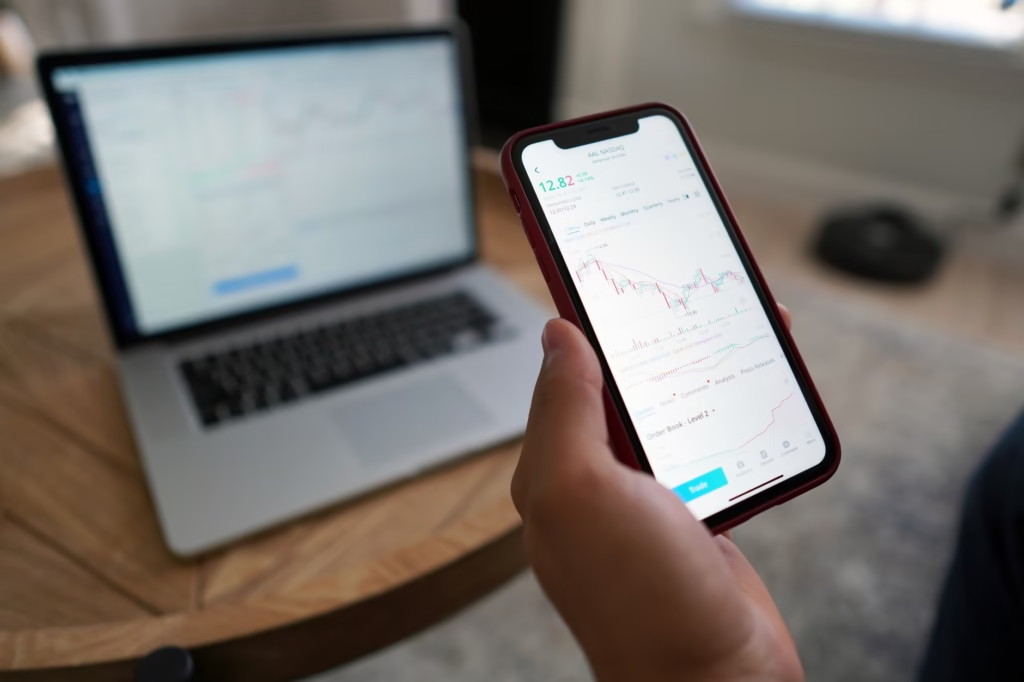
The key beginner concept is this: buying an ETF means buying a slice of a fund, not a single company. Many ETFs track an index, while others are actively managed. Unlike mutual funds, ETF shares usually trade throughout the day at market prices, so the price on your screen can move minute by minute. That flexibility is useful, but it also brings stock-like trading frictions such as bid-ask spreads. (finra.org)
Behind the scenes, a separate mechanism helps the market price stay reasonably close to the value of the underlying holdings. Large broker-dealers called authorized participants can create or redeem large blocks of ETF shares directly with the fund. That process helps align trading prices with the fund’s underlying value, but not perfectly. Investors can still buy at a premium or sell at a discount, especially in thinner or more specialized funds. (finra.org)
Like mutual funds, ETFs are not FDIC-insured, and they can lose value when the underlying holdings fall. The real question is not whether an ETF sounds safe in the abstract, but what the fund owns and whether that risk fits the job you want it to do. (investor.gov)
How to Choose a First ETF Without Getting Lost in the Ticker List
A beginner usually needs a short decision process, not a giant watchlist. Before comparing tickers, decide what job the ETF is supposed to do in the portfolio. Then check the fund’s prospectus, holdings, and costs to see whether the product actually matches that job. The checklist below is a practical first pass, not personalized investment advice. (investor.gov)
- Start with the objective. A long-term growth ETF, a bond income ETF, and a sector ETF can all look appealing while serving completely different purposes. Read the investment objective and principal strategies first, not last. (investor.gov)
- Check what it actually holds. A broad-market fund and a narrow theme fund are both ETFs, but their diversification can be very different. Do not assume the word fund means wide exposure; some ETFs concentrate in a sector, a country, or even a single stock. (investor.gov)
- Compare costs at two levels. The expense ratio matters because ongoing fees reduce returns over time, but it is not the whole story. Trading commissions, ticket charges, advisory fees, and the bid-ask spread can all raise the real cost of ownership. (investor.gov)
- Prefer understandable over exciting. For many beginners, a broad index ETF is easier to evaluate than a leveraged, inverse, or highly specialized product. Some geared products are generally not designed to be held for periods that deviate from their stated short-term objective. (finra.org)
- Use past performance carefully. Recent returns can tell you something about volatility, but they do not tell you what a fund will do next. A one-year winner is not automatically a better long-term fit than a steadier, lower-cost fund that matches your plan. (investor.gov)

Consider a simple hypothetical choice. An investor opening a first brokerage account wants long-term stock exposure for retirement. ETF A tracks a broad U.S. stock index, has a straightforward objective, and is easy to explain. ETF B focuses on a narrow industry and comes with a more exciting story, but its holdings are concentrated and its role in a portfolio is less clear. Even before comparing recent returns, ETF A may be the cleaner beginner choice because the investor can explain what it does, why it belongs in the account, and what risks drive it.
The Beginner Trap Is Assuming Every ETF Is Simple
Two misunderstandings cause a lot of beginner trouble. First, easy trading can make ETFs feel interchangeable, when the underlying holdings and strategy determine most of the risk. Second, people often focus on the expense ratio and ignore how they trade the fund. A low-cost ETF can still be a poor purchase if it has a wide spread or if it is used for frequent trading in an account that adds other charges. FINRA’s Fund Analyzer is useful here because it lets investors compare operating expenses alongside commissions and account-level fees. (finra.org)
For most beginners, the best first ETF is not the most clever one. It is the one with a clear purpose, understandable holdings, reasonable costs, and a risk level that fits the rest of the plan. If a fund’s objective, holdings, and trading costs still seem fuzzy after reading the prospectus, that uncertainty is useful information. Skip it and keep looking.
References
- Investor.gov – Exchange-Traded Funds (ETFs) – https://www.investor.gov/introduction-investing/investing-basics/investment-products/mutual-funds-and-exchange-traded-2
- FINRA – Exchange-Traded Funds and Products – https://www.finra.org/investors/investing/investment-products/exchange-traded-funds-and-products
- Investor.gov – How to Read a Mutual Fund Prospectus (Part 1 of 3: Investment Objective, Strategies, and Risks) – https://www.investor.gov/introduction-investing/general-resources/news-alerts/alerts-bulletins/investor-bulletins/how-read-2
- FINRA – Using the Fund Analyzer – https://www.finra.org/investors/tools-and-calculators/using-finra-fund-analyzer